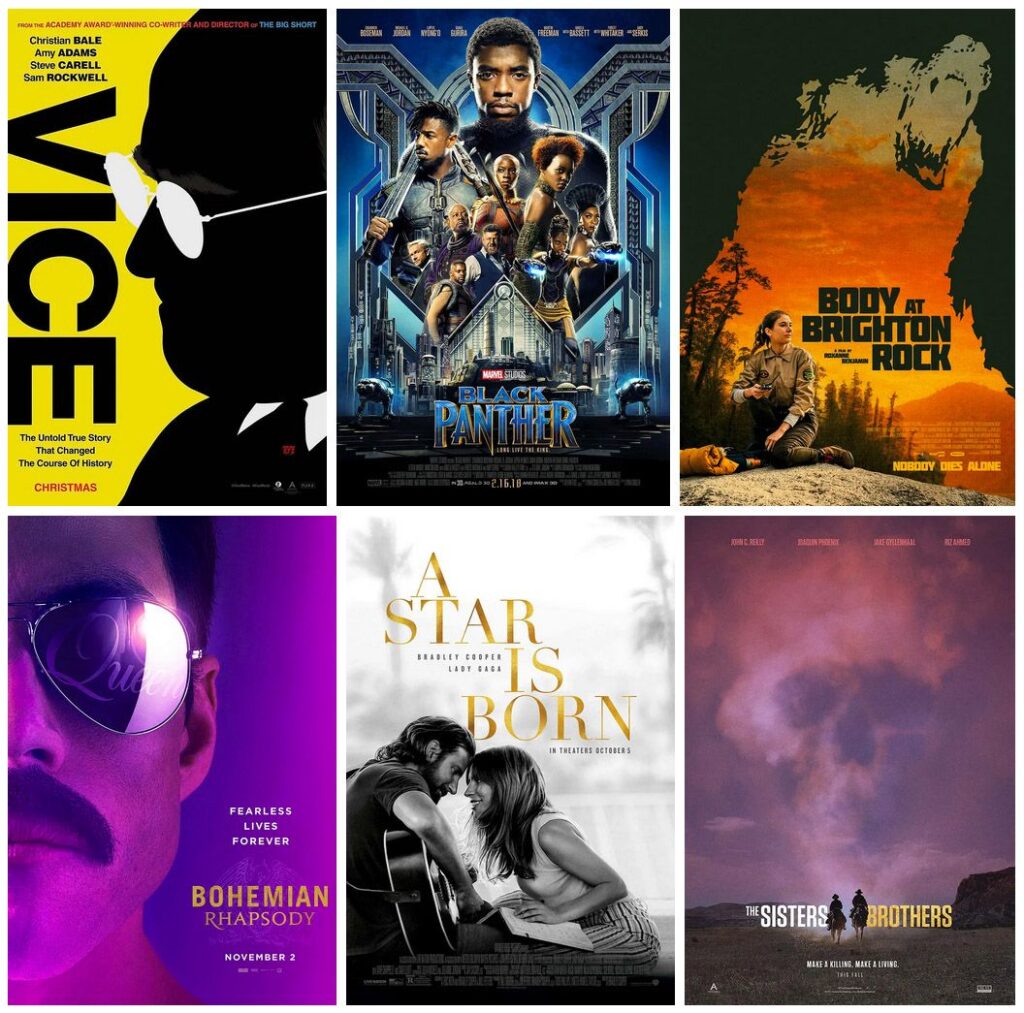

But those clients dried up as the internet gained importance.
The times they’ve been a-changin’ and not for the better if you’re in traditional advertising.
In 2000, T.V. dominated advertising expenditures, with $80 billion spent (calculated in 2019 dollars), compared to the $69.4 billion spent in 2019. Projections show revenues declining to $62.1 billion this year and a little less in 2022.
Magazine advertising stood at $35.5 billion (calculated in 2019 dollars) and decreased to $12.8 billion in 2019. Radio’s total ad spend in the U.S. and Canada reached about $21.4 billion (calculated in 2019 dollars) in 2000 and dipped to $17.8 billion by 2019.
Search advertising stood at $104.8 billion in 2019 and should grow to about $137 billion by 2022. Internet display ads grew from $13 billion in 2007 to $160.2 billion by 2019.
In business, always follow the money. It’s all going to social media, experiential marketing campaigns, and analytics.
Ads have become as simple as A and B — C, you’re fired.
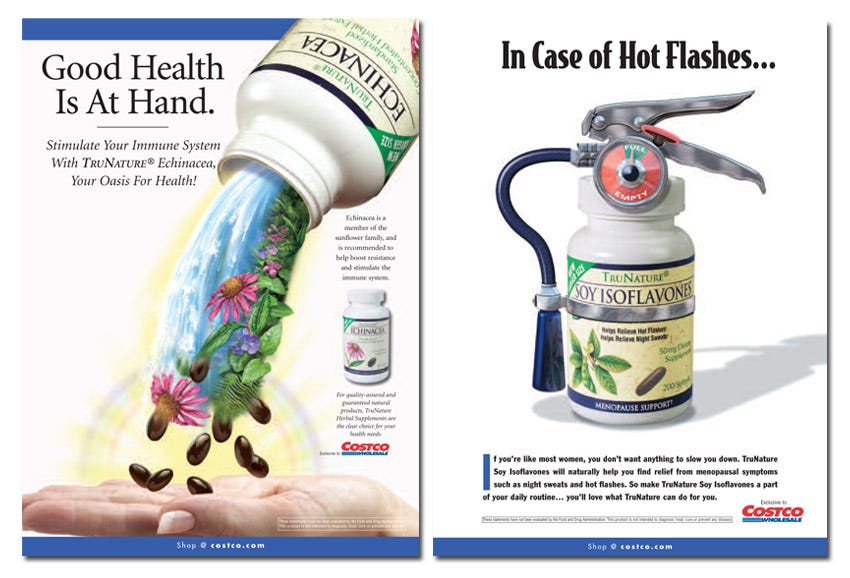
In the old days, we researched our target market, developed a creative strategy, and then brainstormed many ad concepts to present to a client. We combined provocative headlines with memorable images. Clients valued that work, so ads generated thousands of dollars in revenues. Here are two examples from our days working on Costco’s private label herbs and supplements.
As the internet grew, online advertisers have used A/B testing to determine which ads attract the most people in real-time. Google first did it to improve its search results. Amazon did it to make it easier for consumers to find and buy a product. Here’s is the kind of creativity you see in Facebook ads now.

Advertisers can use analytics to show simple, boring ads to a tiny niche target market. Then, they keep testing the message until they find something that users will click. The ad leads consumers to a landing page or website for further interaction. A large part of the industry has turned into direct mail campaigns that offer consumers a discount or enter a contest.
On Twitter, Instagram and Snapchat, companies use influencers or crowdsourcing to win consumers over. Now, homemade videos dominate, appealing to the lowest common denominator.
The last bastion of the print world is packaging design.
For the last ten years, our work has become focused on packaging. It is one of the few in-store experiences where consumers still want to hold a product and examine it.
The most fun I had this year was a playful take on anime to introduce a new candy to the U.S. market.

The writing is on the wall if you want to be a copywriter: learn how to tweet and create memes
Unless you want to earn a penny or two per word writing product descriptions for catalogs.
Worse yet, you can try to make money on online writing sites.